Money · 5 min read
What happens to your mortgage when interest rates rise?
When rates started climbing, we felt the same quiet worry a lot of people did: how much is this going to cost us? It's hard to picture from a headline percentage. Putting our real numbers to it made it far less abstract, and a good deal less unsettling than the not-knowing.
Why a small rate change feels big
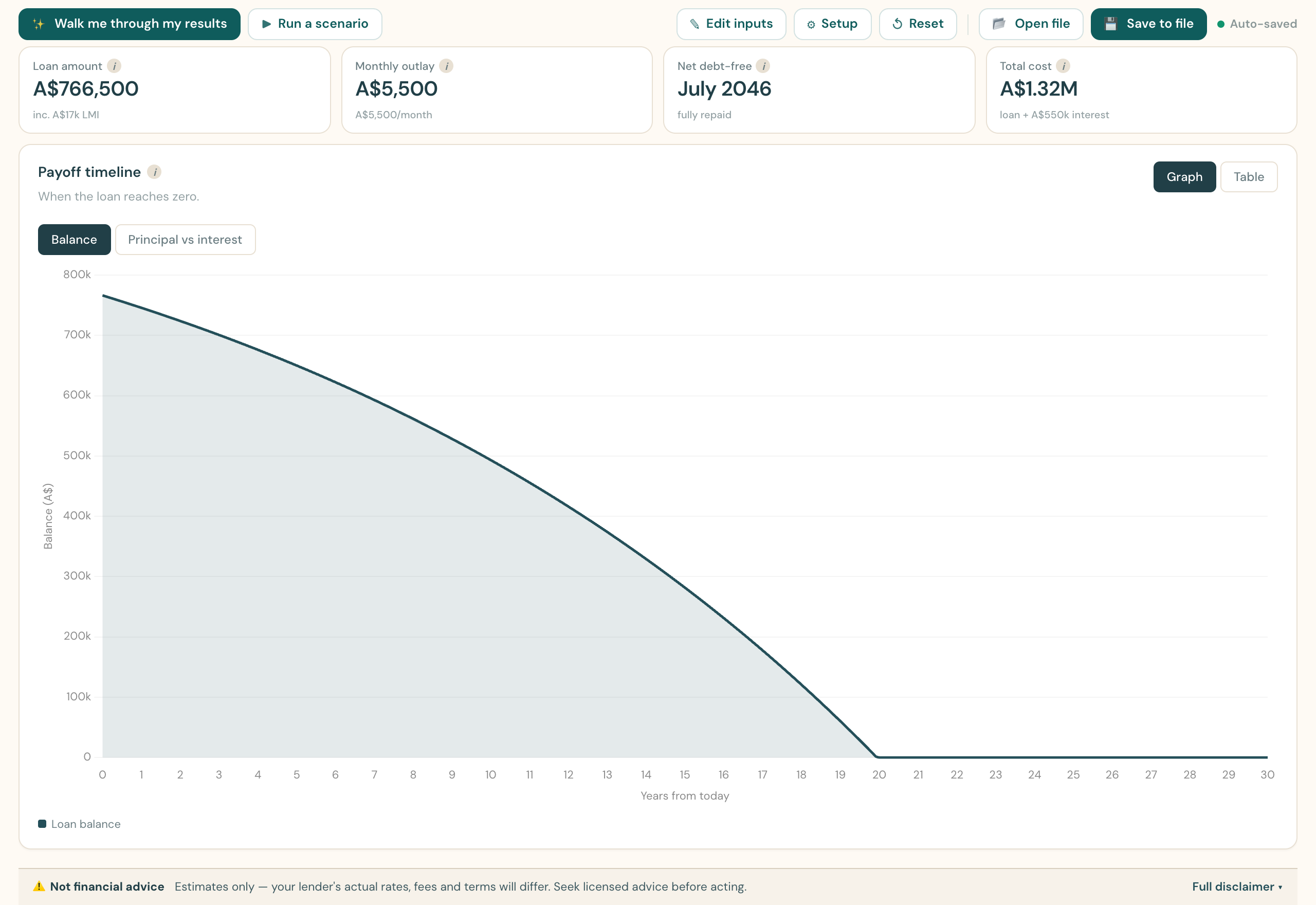
A rate moving from, say, five percent to six sounds like a one percent change. But your repayment isn't based on one percent, it's based on the whole balance you owe. On a large loan, that extra interest is charged on every dollar of it, every period, for years. That's why a change that looks small in percentage terms can add a noticeable amount to your repayment.
The same maths runs the other way too: when rates fall, the saving is larger than the headline number suggests.
Repayment up, or loan longer
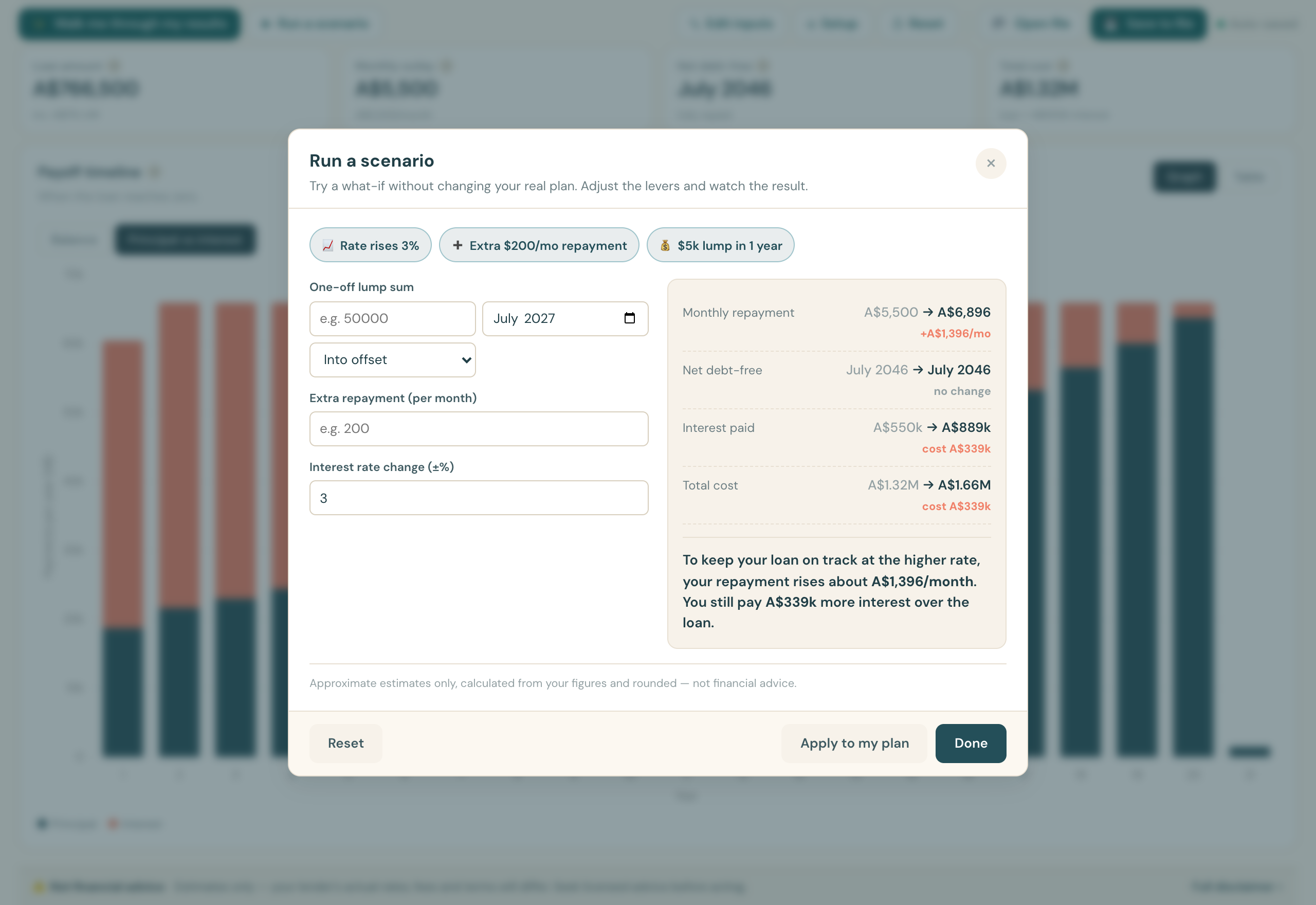
A rate rise usually shows up in one of two ways. If your repayment is set to adjust, the amount goes up so the loan still finishes on time. If you keep the repayment the same, more of it goes to interest and less to the principal, and the loan takes longer to clear. Knowing which one applies to you is worth checking, because they feel very different month to month.
Stress-test before it happens
The thing that settled our nerves was running the worst case on purpose. Put your loan in, then raise the rate by one, two, three percent and see what the repayment becomes. If the higher number is manageable, you can stop worrying. If it's tight, you've found out with time to plan, build a buffer, pay a little extra now, or fix part of the loan, rather than being caught out.
The app that helps
Mortgage Planner
Finally understand what your mortgage really costs, and test any what-if.
- Raise or lower the rate and see your repayment change instantly
- Test a one, two or three percent rise before it happens
- See the effect on total interest and payoff date, not just the monthly figure
Common questions
How much does a one percent rate rise add to my repayment?
It depends on your balance and term, which is why a general figure isn't much use. The quickest way to know is to put your own loan in and nudge the rate up, the repayment updates straight away.
Should I fix my rate to avoid rises?
Fixing trades flexibility for certainty: your rate is locked, but so are extra repayments and offset benefits on many fixed loans. It's worth modelling both before deciding, so the choice fits your plans rather than the headlines.
A quick note
This post shares what we learned from our own mortgage, as general information, not financial advice. Everyone's situation is different, so for decisions about your loan or finances it's worth speaking to a licensed financial adviser, mortgage broker or your lender. Any figures in our app are estimates to help you explore options, not a quote or a guarantee.