Weddings · 5 min read
How do you set a wedding budget you can stick to?
The hard part of a wedding budget is not the total, it is holding to it once the bookings start. What works is deciding a number you are comfortable with, splitting it across categories, then tracking what you actually spend against those estimates as you book. This post covers how to set a budget you can stick to, and the costs that quietly blow one.
How it works
From a spreadsheet to a total that keeps up
Before
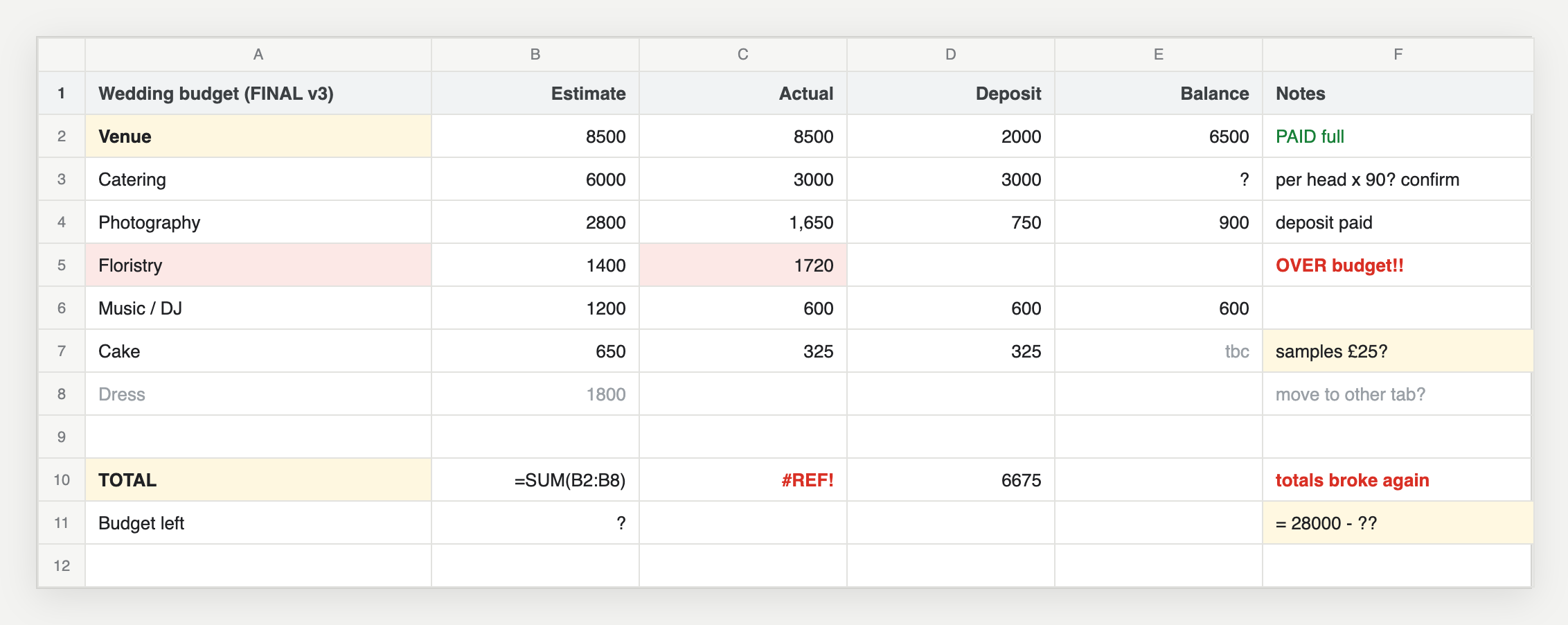
Here is the same job in the app. The three moves are the same as the spreadsheet, but the sums and the warnings look after themselves.
- 1
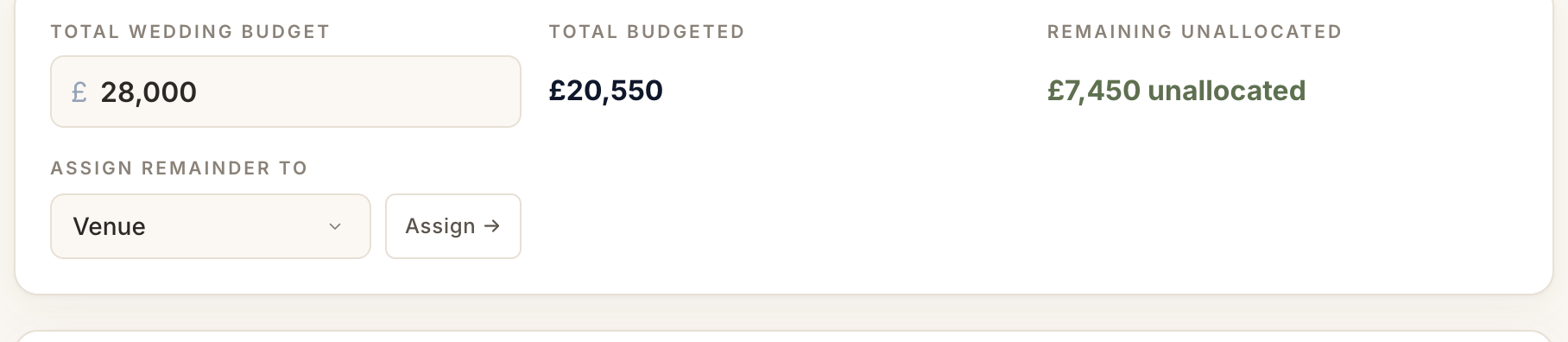
Set your total, then split it
Put in one number you are comfortable with and share it across categories. A running 'unallocated' figure updates as you go, so you always know how much is still on the table before you commit it.
- 2
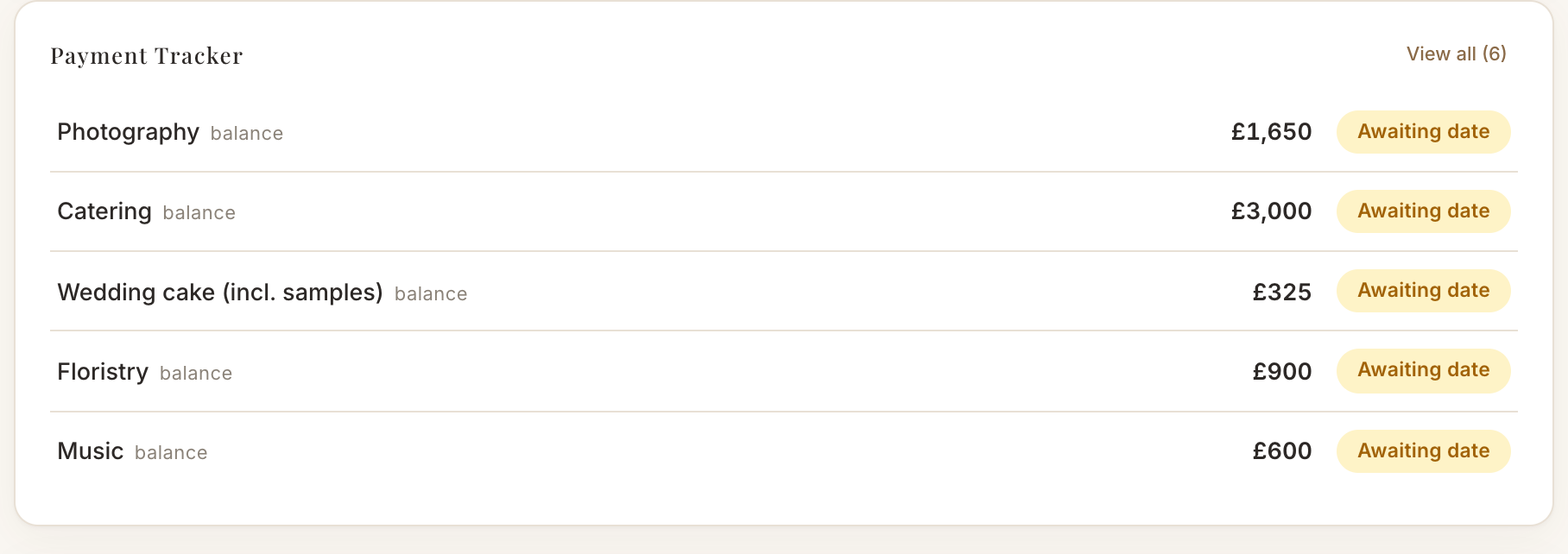
Track deposits and final balances
As you book, record what is paid and what is still owing. Outstanding balances show as 'awaiting date', so a final payment never sneaks up on you the month before.
- 3
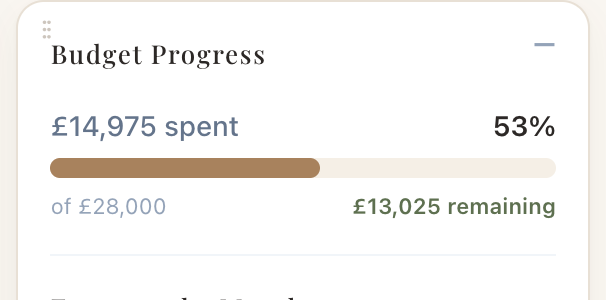
See where you stand at a glance
Every estimate and payment rolls up into one running total. There is no formula to fix and no cell to drag: the number is right every time you open it.
What you trade
Where the money actually goes
The thing that surprised us most was just how lopsided it is. The venue and catering together swallow the biggest chunk, often close to half the whole budget. And because they scale with your guest count, the number of people you invite quietly becomes the single biggest decision you make. Almost everything else follows from it.
After that it's photography, what you wear, flowers and styling, music, and the smaller bits, cake, stationery, rings. None of those are the thing that blows a budget. The guest list is.
Set a number, then split it
The mistake we made early on was pricing everything up first and hoping the total landed somewhere sensible. It never does. What worked was the opposite: decide the total you're comfortable with, then divide it across categories. It's so much easier to say "flowers get this much" than to add up five quotes and panic.
Then, and this is the bit that actually saved us, track what you really spend against those estimates as you book. Watching the running total is what stops a budget quietly running away from you at 11pm three months out.
The costs nobody warns you about
A handful of things caught us completely off guard: service charges and tips on catering, dress alterations, vendor meals, postage for invitations, and overtime if the night runs long. Individually they're small. Together they were a genuinely uncomfortable surprise.
Build a buffer of around ten percent in from the start and these stop being a shock and become just... the plan.
The app that helps
Wedding Planner
Everything you need to plan your wedding, in one place.
- A budget split across every category, with estimates vs. what you actually spend
- Deposits and due dates, so a payment never sneaks up on you
- Guest list and seating that stay in step with the budget
Common questions
What's the biggest wedding expense?
For most couples it's the venue and catering combined, because they scale with the guest count. Trimming the guest list is the most effective way to bring the total down.
How big a buffer should I leave?
We'd say around ten percent of your total. It covers the late extras, alterations, tips, overtime, that always seem to appear near the end.
A quick note
This is based on our own wedding and what worked for us, shared as general information rather than professional advice. Costs and customs vary a lot by location and vendor, so treat any numbers as a starting point and get your own quotes.