Money · 6 min read
Understanding your mortgage: what are you actually paying for?
For our first year, the mortgage was just a number that left the account each month. We couldn't have told you how much of it was interest, or what would happen if we paid a little more. Once we understood the handful of moving parts, it stopped being a black box and started being something we could actually steer. Here's the plain-English version.
The four numbers that define your loan
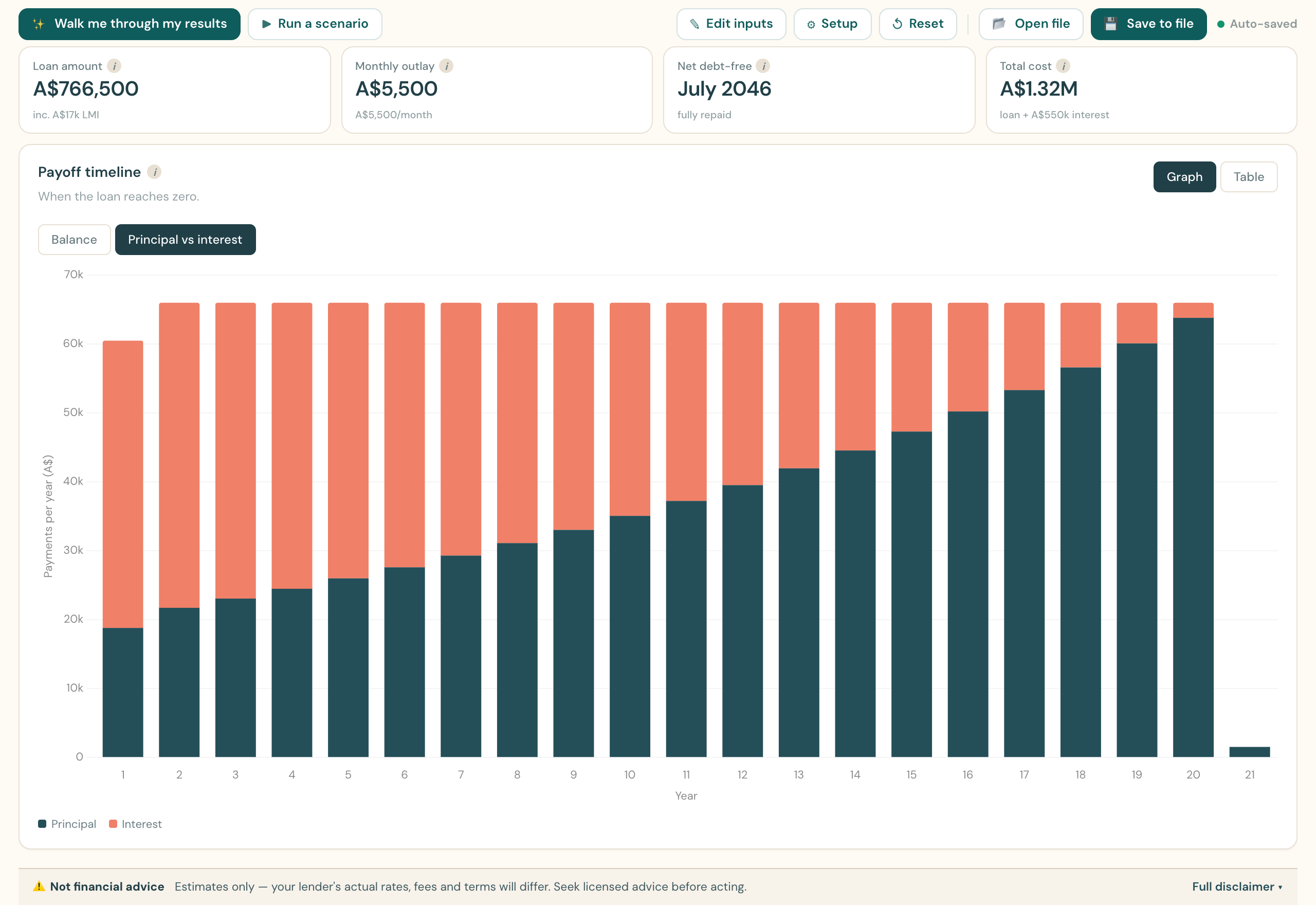
Strip away the jargon and a mortgage is really just four numbers: the balance you still owe (the principal), the interest rate, the term (how many years you have left), and the repayment you make each period. Change any one of them and the other outcomes move. That's the whole machine.
The one most people never look at is how those numbers interact over time, which is exactly where the surprises, good and bad, live.
Where each repayment actually goes
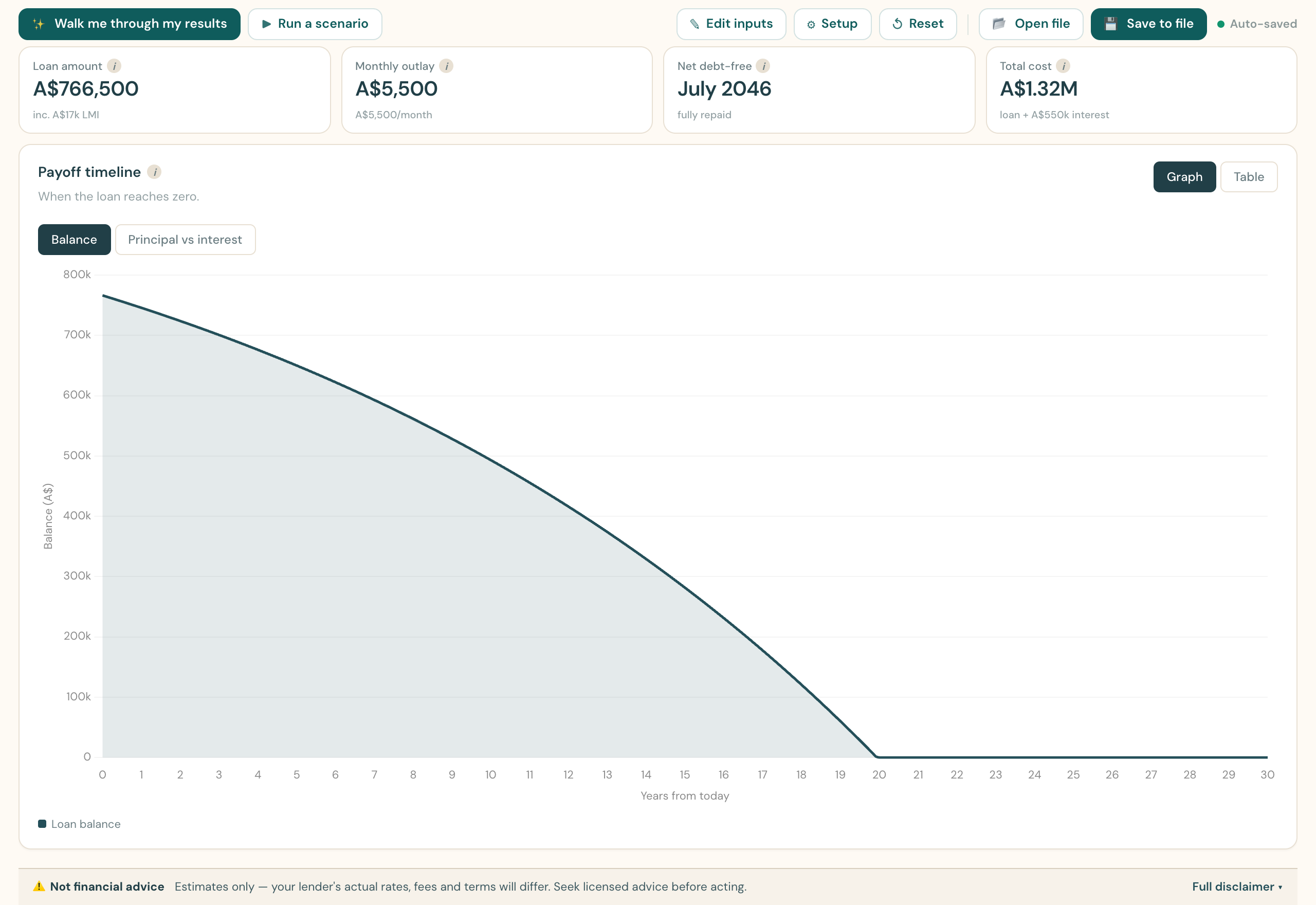
Every repayment splits in two: part pays the interest owed on the current balance, and the rest chips away at the principal. Early on, when the balance is large, most of your payment is interest and only a little touches the loan itself. As the balance falls, that flips, and more of each payment starts clearing the principal.
Understanding that split is the thing that makes everything else click. It's why extra repayments early on are so powerful, and why the first few years can feel like you're barely moving the balance.
Run the scenario before you make the change
The best habit we picked up was simple: never guess what a change will do, model it first. Thinking about paying an extra hundred a month? Put it in and see how many months it saves. Worried about a rate rise? Nudge the rate up and watch the repayment move. A windfall you might throw at the loan? Try it as a lump sum before you commit.
Seeing your own numbers respond, rather than a generic example, is what turns a vague intention into a decision you can actually make.
The app that helps
Mortgage Planner
Finally understand what your mortgage really costs, and test any what-if.
- Enter your real loan, balance, rate, term and repayment, in about a minute
- See how much of each repayment is interest versus principal
- Change one thing and watch your payoff date and total interest update live
Common questions
What's the difference between principal and interest?
The principal is the amount you still owe. Interest is the charge for borrowing it, worked out on that balance. Each repayment covers the interest first, and whatever's left reduces the principal.
Why does so little come off the balance early on?
Because interest is charged on the balance, and the balance is at its biggest at the start, so most of those early repayments go to interest. It shifts steadily as the balance falls, which is also why extra repayments early make such a difference.
A quick note
This post shares what we learned from our own mortgage, as general information, not financial advice. Everyone's situation is different, so for decisions about your loan or finances it's worth speaking to a licensed financial adviser, mortgage broker or your lender. Any figures in our app are estimates to help you explore options, not a quote or a guarantee.