Money · 5 min read
Offset account or extra repayments: which pays off your mortgage faster?
Once you've got a bit of spare cash each month, the same question comes up: do you pay it straight onto the mortgage, or park it in an offset account? Both shrink the interest you pay. The difference is what happens to your money afterwards, and that difference matters more than we first realised.
How they're actually the same
Both act on the one number that drives your interest: the balance it's calculated on. An extra repayment lowers the loan balance directly. An offset account lowers the balance the bank charges interest on, by the amount sitting in the offset. Dollar for dollar, the interest saved is very similar. That surprises people, but it falls straight out of how interest is worked out.
How they're different, and why it matters
The gap is access. Money you pay onto the loan is in the loan, and getting it back means redrawing, if your loan even allows it. Money in an offset account stays yours, ready to spend, while still cutting your interest every day it sits there.
So the real trade-off is discipline versus flexibility. Extra repayments are final, which some people prefer because the money can't be touched. An offset keeps an emergency fund working for you without locking it away. Neither is simply right, it depends on how much cash you want within reach.
Test it on your own loan
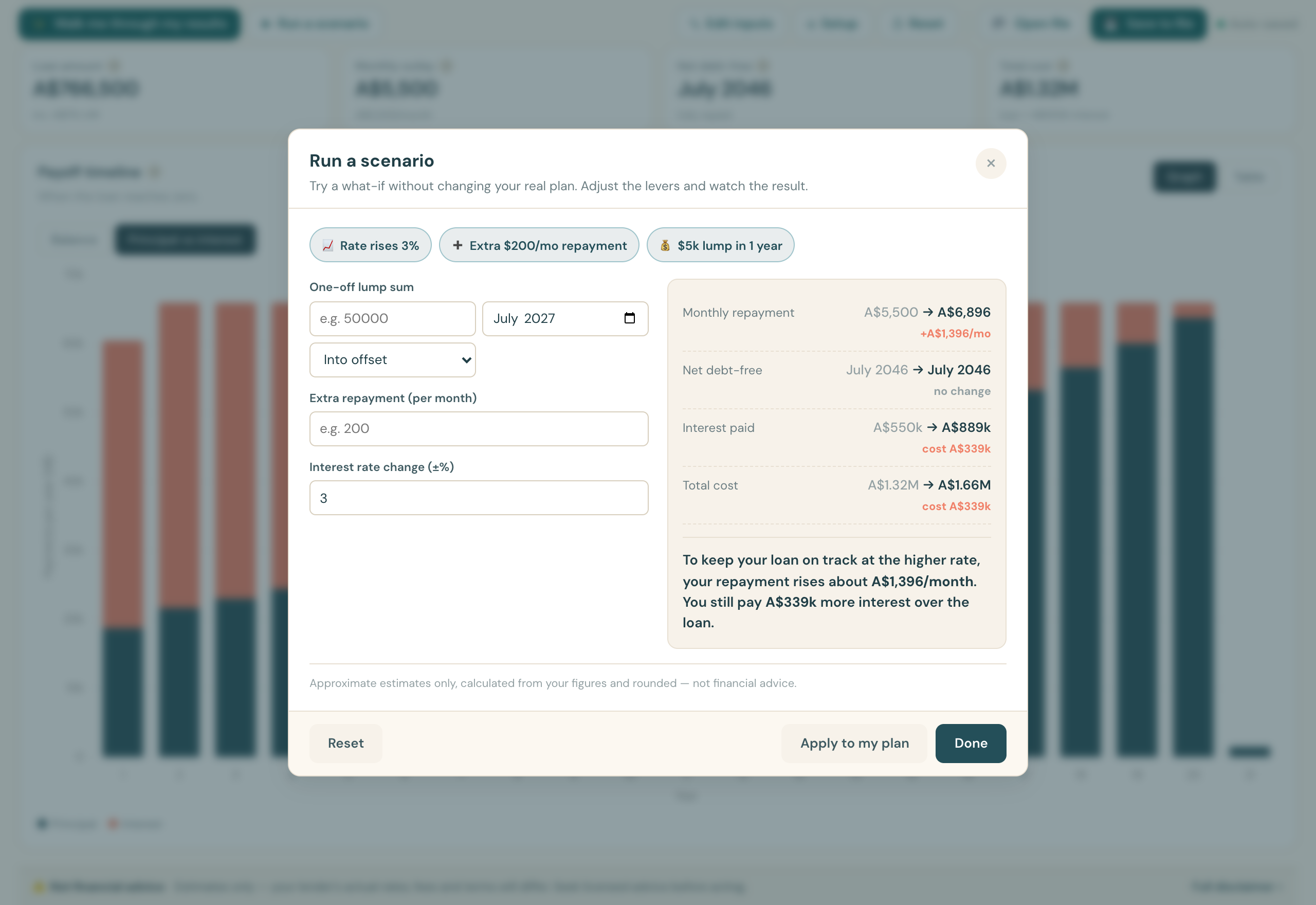
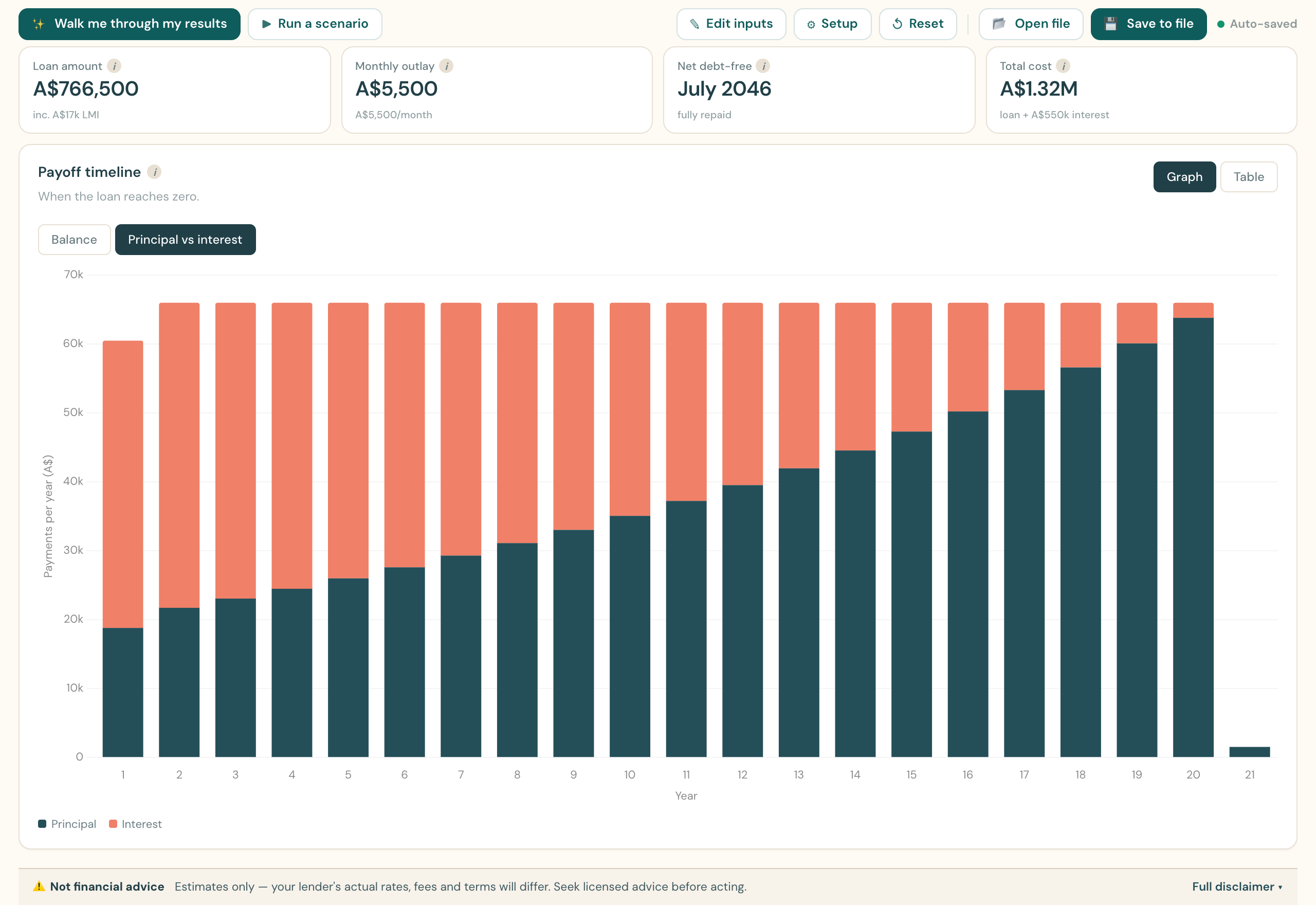
Because the interest saved is so close, the decision usually comes down to your situation, not a rule of thumb. That's exactly the kind of thing worth modelling: put the same amount in as extra repayments, then as an offset balance, and compare the payoff date and total interest. Then weigh that against how much you want to keep on hand.
The app that helps
Mortgage Planner
Finally understand what your mortgage really costs, and test any what-if.
- Model an offset balance and extra repayments on the same loan
- Compare payoff date and total interest for each, side by side
- See the interest saved so the decision is about access, not guesswork
Common questions
Do they really save about the same interest?
For the same amount of money, very close, because both reduce the balance your interest is calculated on. The practical difference is access: an offset keeps the money available, extra repayments don't.
Is an offset account always worth it?
Not always. Some come with higher rates or fees that can eat into the benefit. It's worth comparing the interest saved against any extra cost, which is quick to model before you decide.
A quick note
This post shares what we learned from our own mortgage, as general information, not financial advice. Everyone's situation is different, so for decisions about your loan or finances it's worth speaking to a licensed financial adviser, mortgage broker or your lender. Any figures in our app are estimates to help you explore options, not a quote or a guarantee.